

9.Himeji Castle(Hyogo)
The Origin of the Name Himeji
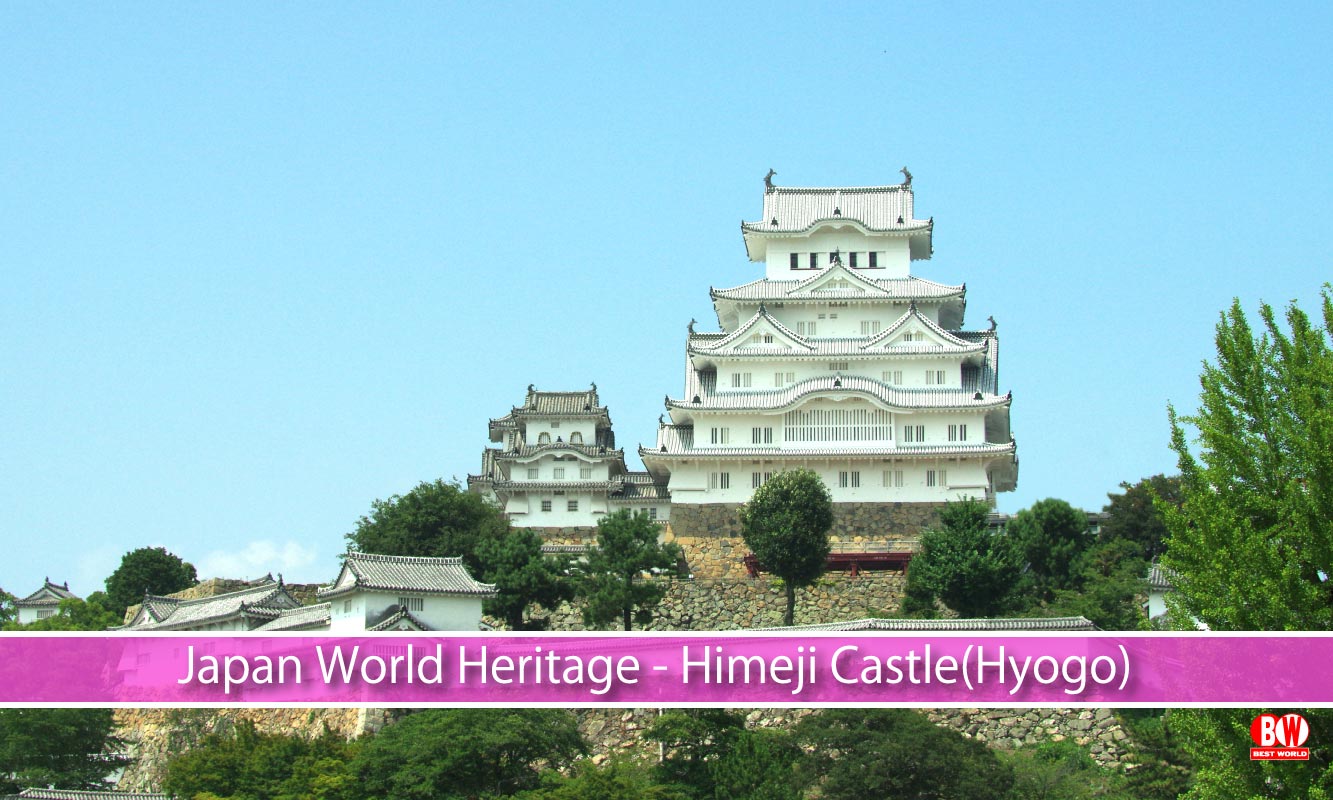
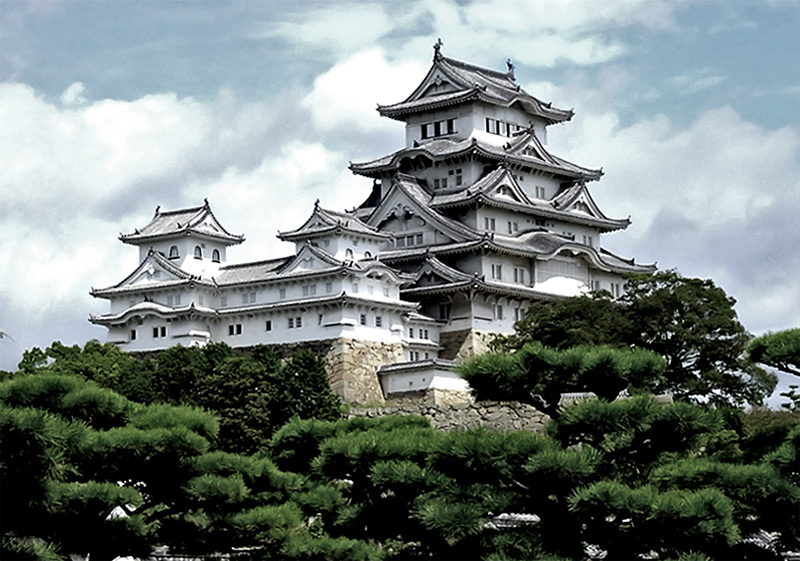 The name of “Himeji” derives from Himeji-oka (Himeji Hill) in Harima-no-kuni-fudoki (The Topography, or the Record, of the Harima Region). In the mythological age Onamuchi-no-mikoto or Okuninushi-no-mikoto (a Deity of Nation-building, Agriculture and Medicine) had a son named Hoakari-no-mikoto. Hoakari-no-mikoto was so violent that Onamuchi-no-mikoto decided to abandon him on an island when they were at sea. However, Hoakari-no-mikoto noticing the boat leaving the island without him caused the boat to be wrecked by the wind and waves which he created in a fit of rage. Then, each of the 14 hills where the boat and loads drifted ashore was given a name such as Funa-oka (Boat Hill),Inu-oka (Dog Hill),Hako-oka (Box Hill), Koto-oka (Harp Hill) and “Himeji-oka.Himeji-oka was named after the place where Himeko drifted ashore and later Himeji-oka was said to be changed into the present Hime-yama Hill on which Himeji Castle stands.Himeko is silk taken from the cocoons of silkworms and it was called Himeji in an ancient dialect.The use of the word Himeji as the name of the area was first found in the literature on the construction of Himeji Castle and its castle town by the order of Ikeda Terumasa the lord of Himeji Castle in the beginning of the Edo period (1603-1867).
Kokoen Garden
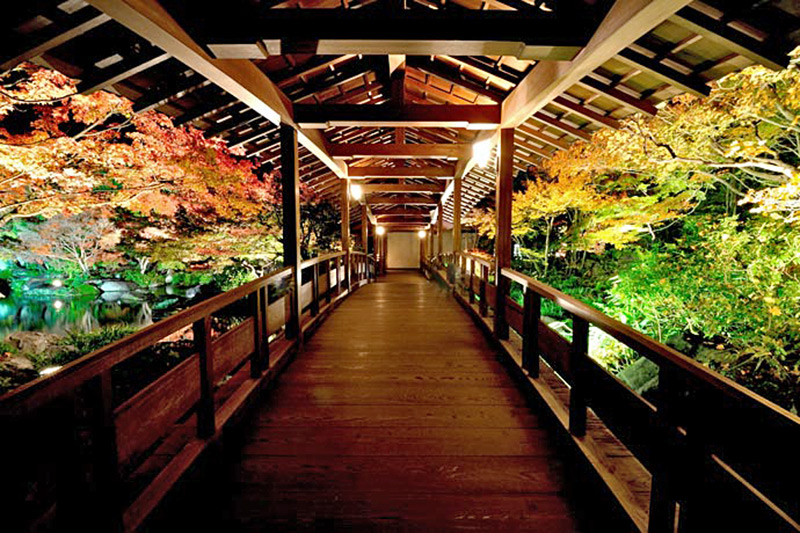 With its rich natural environment, Himeji City also has beautiful autumn colors. A particular must-see is the autumn colors at the Japanese-style Kokoen Garden, which is adjacent to Himeji Castle. There are 9 gardens here, each of which has its own unique autumn scenery.
Himeji Yukata Festival
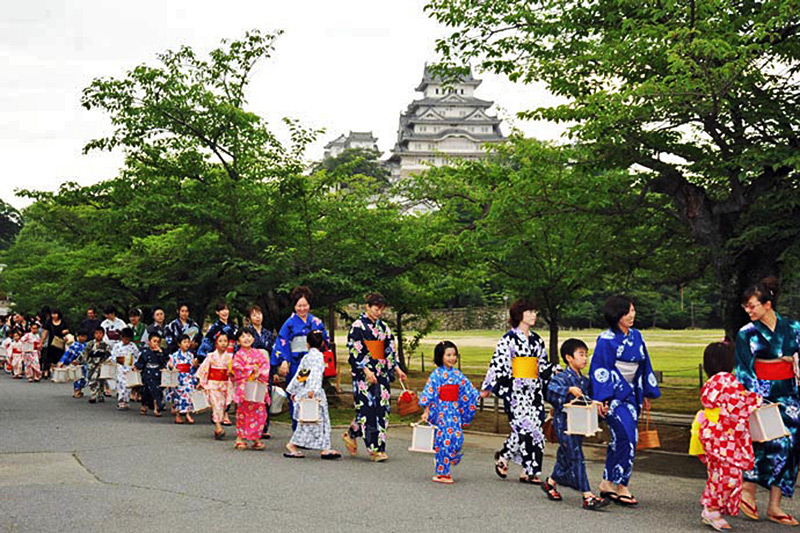 Himeji Yukata Festival (typically held around from June 22nd to 24th each year) is said to have originated around 260 years ago as a way of encouraging common people to visit Osakabe Shrine in a friendly manner in their yukata when the shrine (Himeji Castle’s guardian deity) was moved to the center of town by Sakakibara Masamine, who was then lord of the castle.
Okiku-ido (the Well of Okiku)
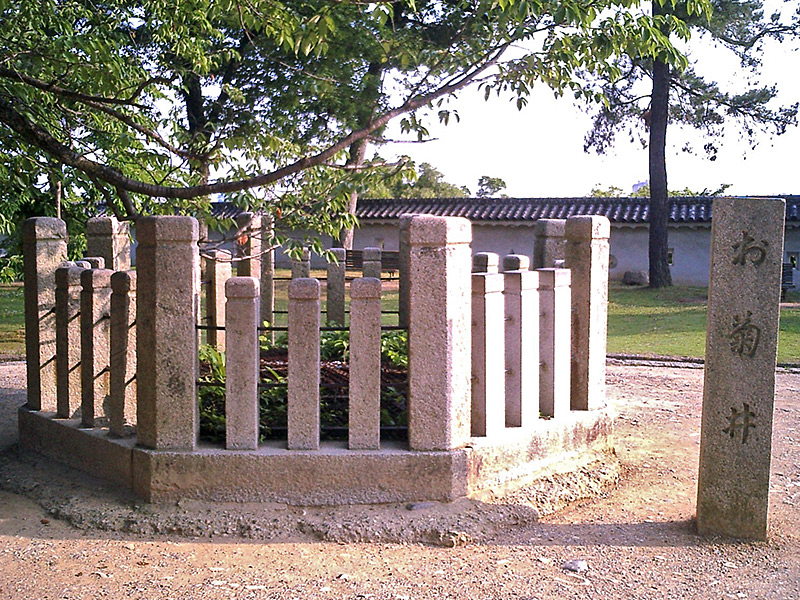 The legend says that “Okiku-ido” in a square called Kamiyama-zato-maru in Himeji Castle is the well which is the site of a famous ghost story “Banshu Sara-yashiki”.In the Eisho era (1504-1521), Aoyama Tessan was a regent of the lord of the castle, Kodera Norimoto, and Tessan plotted to take over his master’s castle. Kinugasa Motonobu, a faithful retainer of the castle lord, noticed Tessan’s intrigue and sent Okiku, Motonobu’s lover, to the Aoyama family to serve as a maid but she was actually a spy. However, the Aoyama family’s coup d'état was successfully carried out in spite of Okiku’s effort. After the coup d'etat, Okiku stayed with the Aoyama family in order to send information to Motonobu who defected to Tatsuno (the area to the west of Himeji). Finally, Chonotsubo Danshiro realized that Okiku was a spy, and tried to force her to marry, taking advantage of her weakness.But Okiku would not accept his proposal of marriage. Danshiro got so angry that he hid one of 10 dishes which were part of the Kodera family’s treasures, and laid the blame on Okiku. She was killed and her body was thrown into the well.Since then, it is said that Okiku’s sad voice can be heard from the well every night, counting dishes, “One, two,three,……”.Later, Norimoto’s faithful retainers including Motonobu destroyed Tessan and his warriors. Okiku is enshrined as “Okiku Dai-myojin (the Deity Okiku)” at Okiku Shrine in the precinct of Jyuni-sho Shrine.