

16.Ancient Capital of Kyoto(Kyoto,Shiga)


Ginkaku-ji Temple(The Silver Pavilion)
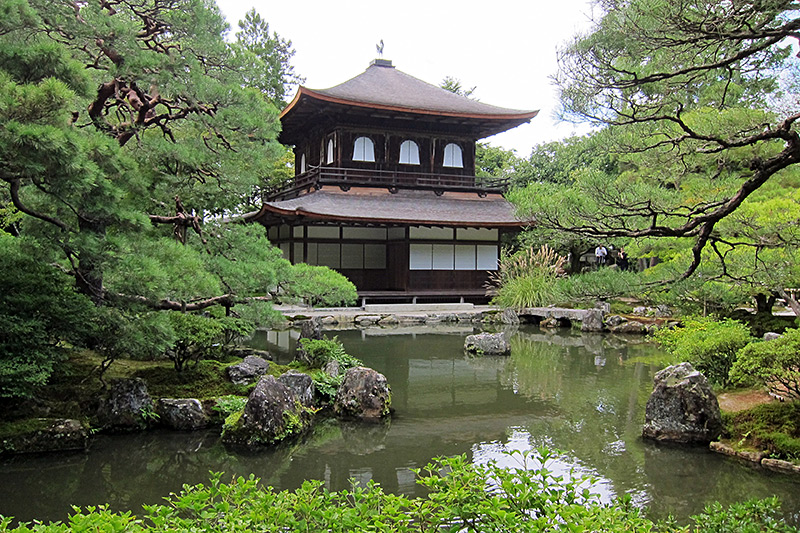 Jisho-ji Temple is better known as Ginkaku-ji (Temple of the Silver Pavilion), a temple belonging to the Buddhist Shokoku School of the Rinzai Zen sect. Ginkaku-ji Temple (The Silver Pavilion) is an elegant temple set in beautiful grounds at the foot of Kyoto's eastern mountains. Its grounds are an outstanding example of Japanese landscape gardening. Whether one is sitting on the landing beside the unique sand garden with its 2-metre silver cone, or walking the trail and catching glimpses of the Pavilion from different vantage points, one is constantly aware of the lovely details which move the heart. Originally designed as a retirement villa for the Shogun Ashikaga Yoshimasa (1436-1490) in the Muromachi Period (1338 - 1573), Ginkaku-ji Temple was modeled on its sister temple Kinkaku-ji Temple (the Golden Pavilion). Yet Ginkaku-ji Temple was never plated with silver, and the main temple building remains an unpainted brown--and in its way, exemplifies the Japanese idea that something plain can be beautiful.
Kinkaku-ji Temple (The Golden Pavilion)
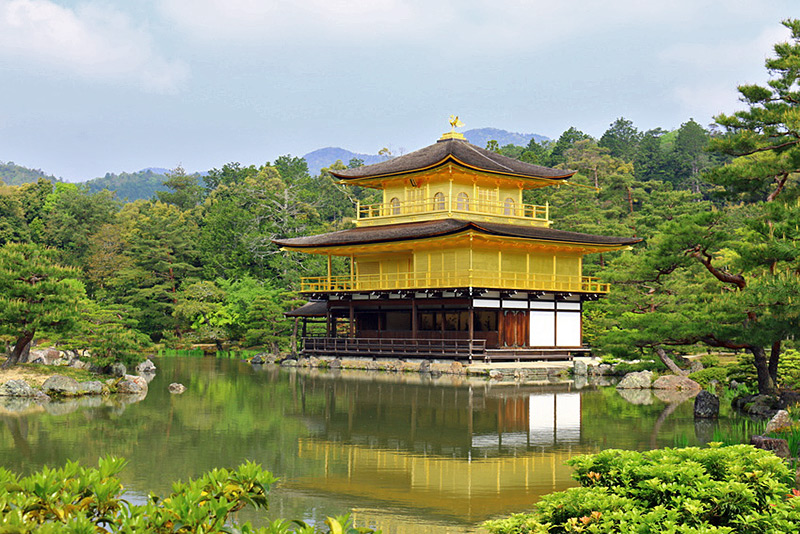 The image of the temple richly adorned in gold leaf reflects beautifully in the water of Kyokochi, the mirror pond.It is perhaps the most widely-recognized image of Kyoto. Seen reflected in the adjoining "mirror pond" with its small islands of rock and pine, Kinkaku-ji Temple, "The Golden Pavilion," is a breathtaking must-see.The building's first purpose was to serve the retiring Shogun Ashikaga Yoshimitsu (1358-1409) as a residence. The gold-leaf-adorned building was converted into a Zen temple shortly after his death. In an event that was later fictionalized by the renowned author Yukio Mishima, a 21-year-old monk burned Kinkaku-ji Temple down in 1950. The temple was rebuilt in 1955 and continues to function as a storehouse of sacred relics.k
Kiyomizu-dera Temple
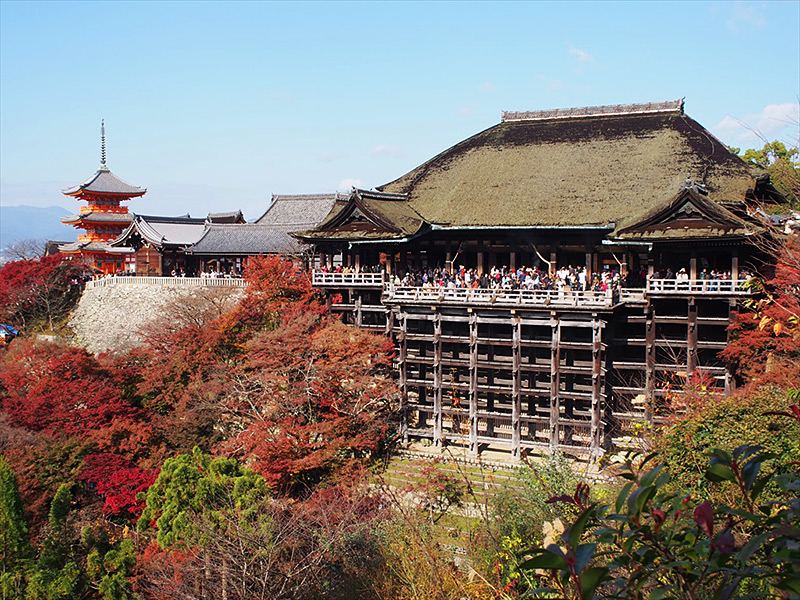 The expression "to jump off the stage at Kiyomizu" is the Japanese equivalent of the English expression "to take the plunge".Kiyomizu-dera Temple is perhaps the most popular of the temples in Kyoto and is a fixture in the minds of the Japanese people. The temple's veranda juts out of the side of a mountain supported by 13-meter-high wooden columns. The main hall with its distinctive hip-shaped roof of cypress bark rests to the rear of the veranda and houses within it a priceless statue of Kannon Bodhisattva, the goddess of mercy. From the veranda, one can appreciate fine views facing west over the city of Kyoto. This is an auspicious place to watch the sunset, which may also explain the romantic associations accorded to the temple.
To-ji Temple
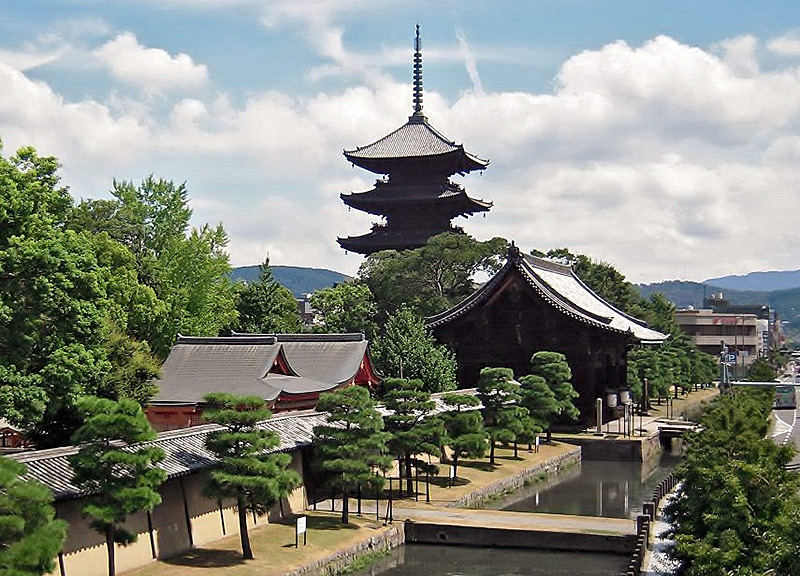 The 5-story 57 meter high pagoda has long served as a city landmark and a center for spiritual and vibrant community life. On the 21st of each month, a large flea market (Kobo-san market) is held on the grounds of To-ji Temple, drawing vendors from all over Japan. Handicrafts, antique clothing and furniture, children's toys, plants and food are available in abundance.To fulfill an Imperial decree to protect the city, To-ji temple was built in 794. In 823 it changed hands from the emperor to the Shingon sect of Buddhism's originator, Kobo Daishi. The lecture hall contains 21 striking mandala images which encode Shingon teachings, while the main hall of the temple contains a blend of Chinese, Indian, and Japanese architectural styles, as well as statues of healing Buddhas.
Nijo-jo Castle
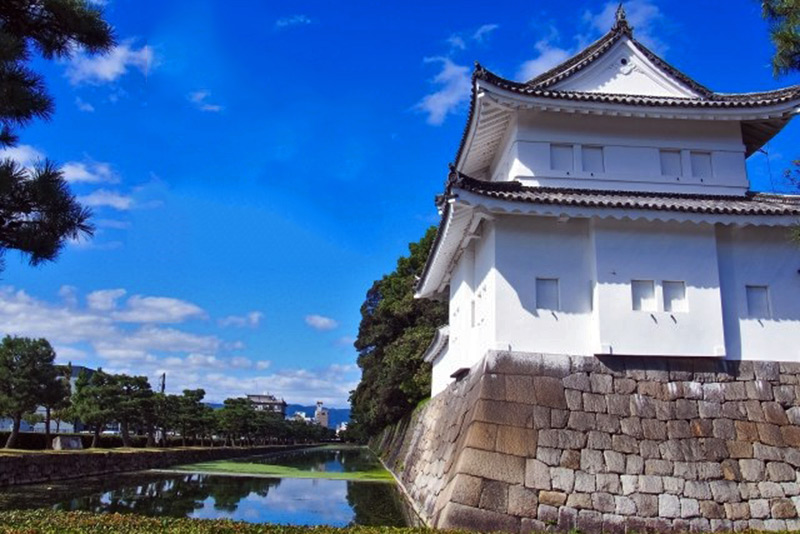 The gorgeous style of this castle was intended as a demonstration of Shogun Tokugawa Ieyasu (1542-1616)'s prestige.Nijo-jo Castle was the residence of the Tokugawa shoguns in Kyoto, who had been ruling Japan for over 260 years from 1603 to 1868, and it remains an eloquent testimony to their power. The wide moat, massive stone walls, and heavy yet elaborate gates are still impressive, and were the only fortifications the inhabitants felt necessary, so firm was their grip on power. The grounds are large and contain several lovely gardens as well as groves of plum and cherry trees. The palace building itself is imposing, yet upon closer examination, is rich in decorative detail.
Kamigamo-jinja Shrine
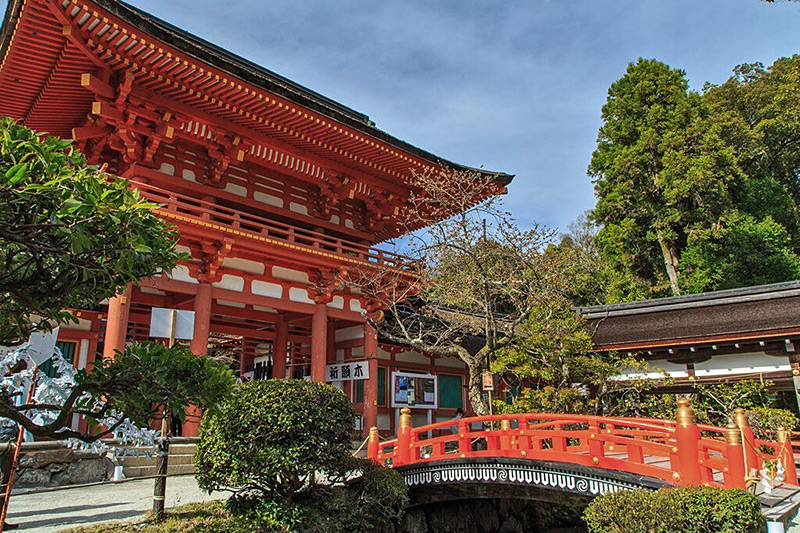 This shrine, also named "Kamowakeikazuchi-jinja", is one of the oldest shrines in Kyoto, dating back to the 7th century and predating the establishment of Heian-kyo (Kyoto).A large orange torii (gate) marks the entrance to Kamigamo-jinja Shrine. Beyond it, a straight white path leads through a grassy field to another torii that stands before a large sacred grove. The path then enters a forest and leads to the shrine's main hall which is situated at the confluence of two clear streams. Two white-sand mounds next to the main building are to serve as mountains for divinities to alight upon.
Nishi-Hongwan-ji Temple
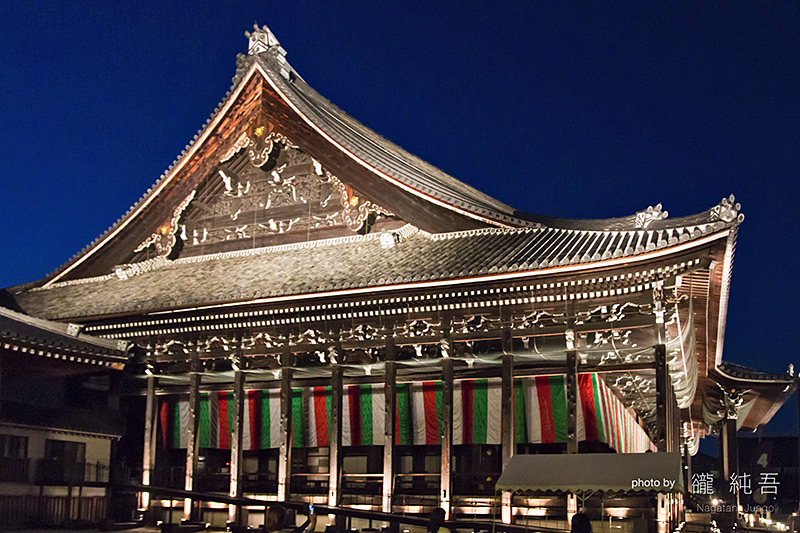 Nishi-Hongwan-ji Temple is designed to impress visitors. The finest example of Momoyama Period (1573-1603) architecture in Kyoto, the temple features large buildings, elaborate gates with gold trim, gilded altars, painted statues, and a host of other items designated National Treasures, including the oldest Noh stage in Japan.Nishi-Hongwan-ji Temple is the headquarter of the Shin Buddhism, which has the largest number of adherents of any sects in Japan. If you spend some time on the wide tatami mat in front of the altar in the main hall and bask in the splendor of the decoration, you would feel the power of this influential spiritual movement. Perhaps one can even catch a glimpse of the "Pure Land," the Buddhist heaven the elaborate display is meant to evoke.