

7.Horyu-ji,Cultural Properties of Nara(Nara)
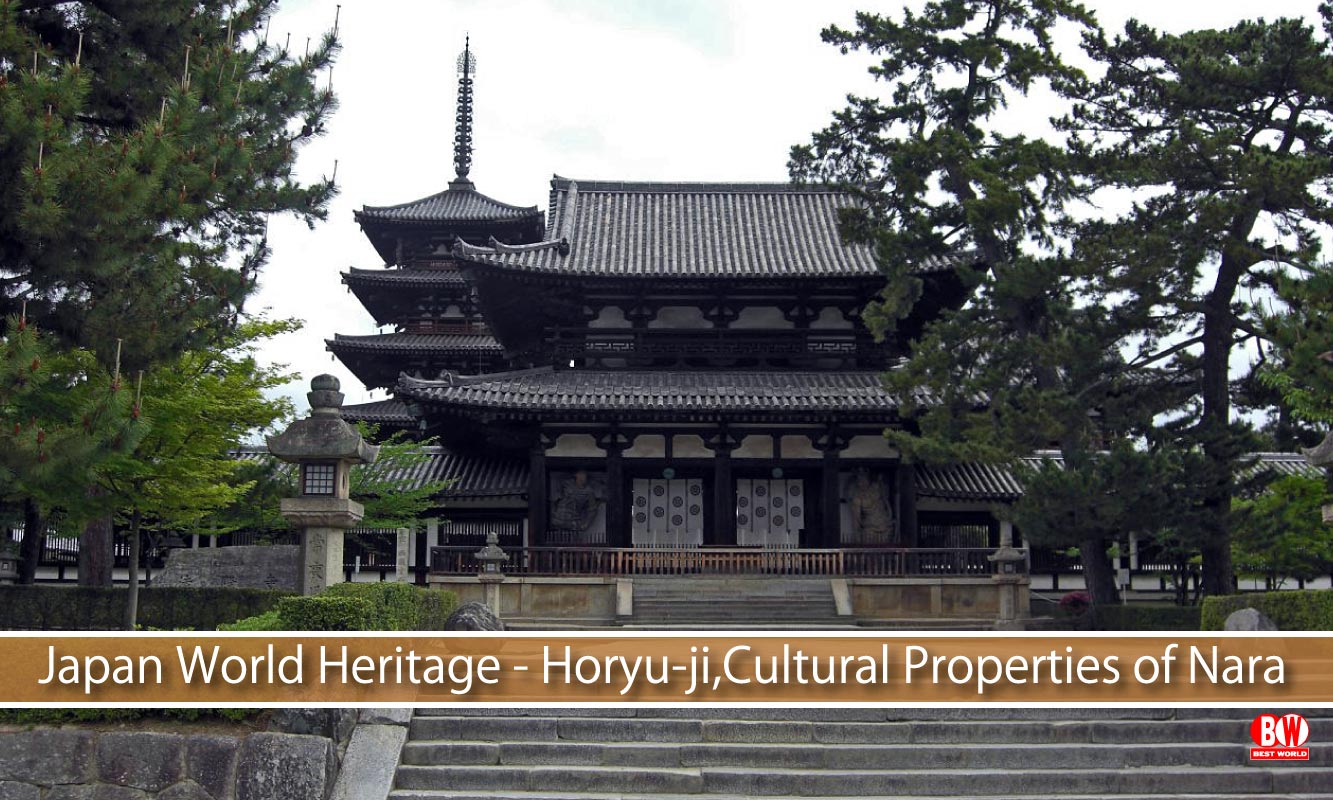
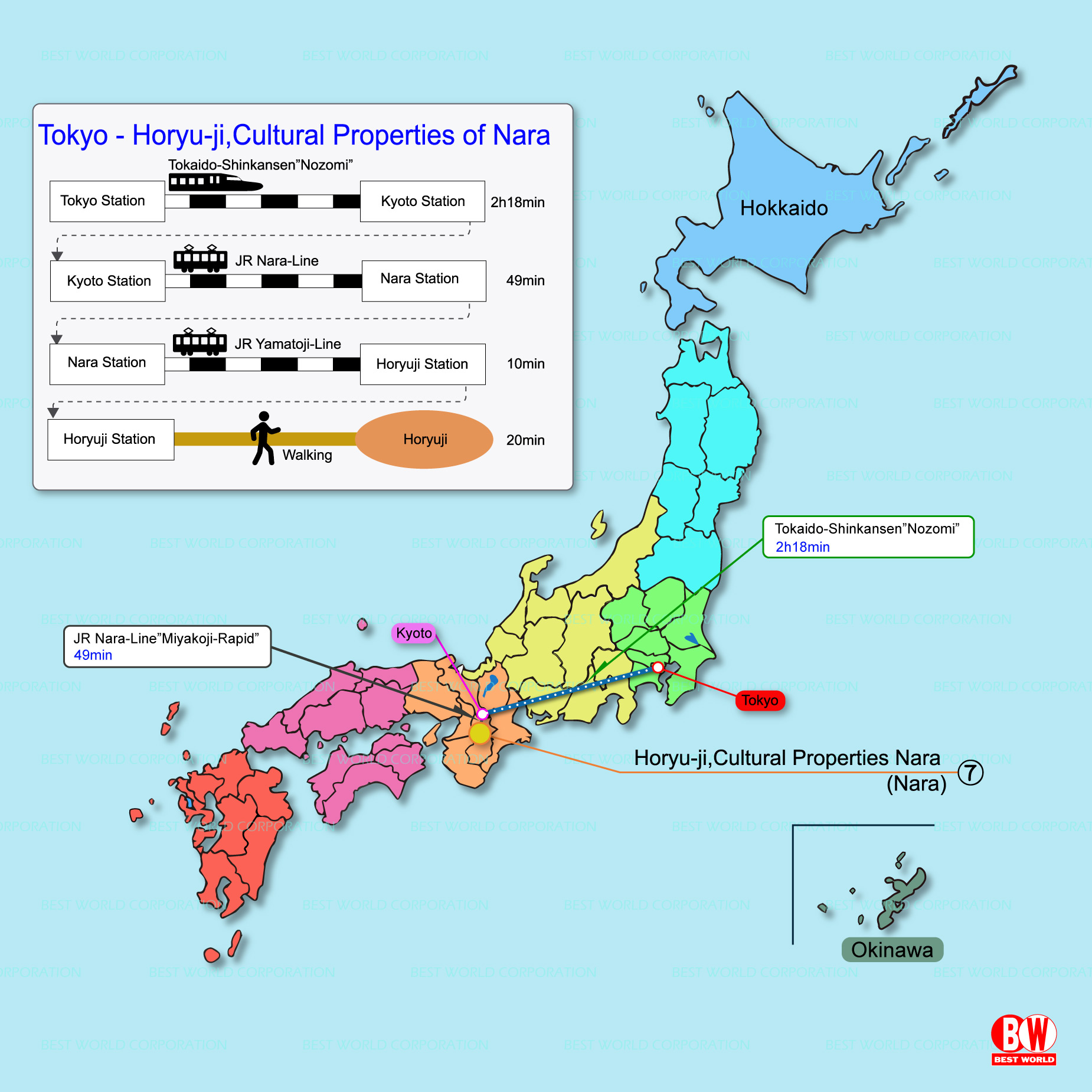
Horyu-ji Temple
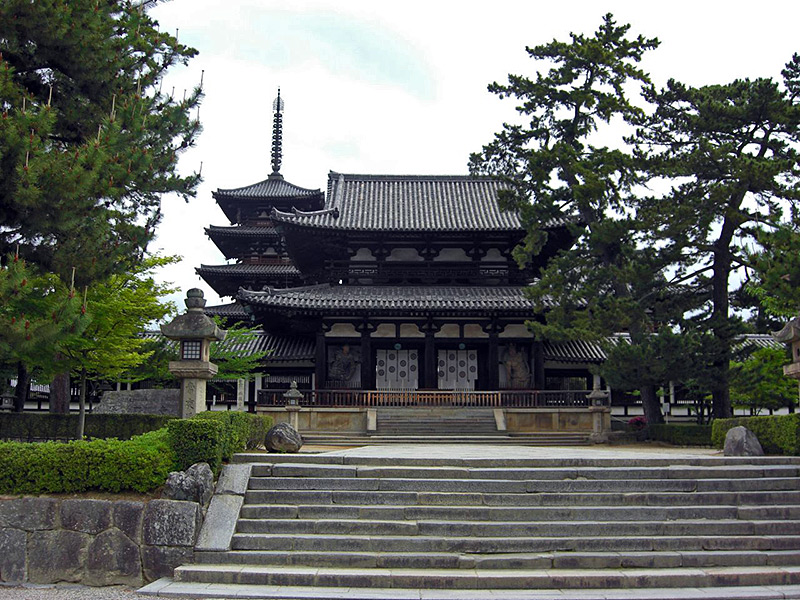 The Oldest Wooden Budding in the World
Horyuji Temple was established by Prince Shotoku Taishi(574-622)and Empress Suiko (554-628) in 607 to show respect for the late Emperor Yomei. As the 31st emperor and Shotoku's father.Emperor Yomei believed that building a Buddhist temple could him recover from illnes. This building, the oldest wooden building in the world, was designated as a UNESCO WorId Cultural Heritage site in 1993. ”The temple precincts cover 187 million square meters. The temple can be roughly divided into two main groups of buildings. One is the Saiin Garan (Western Precinct),established in the 7th century and comprised of a series of the oldest wooden building in the world.include at least 55 buildings specified as Ntional Treasures or Important Cultural Assets.
The Central Gate (Chumon)
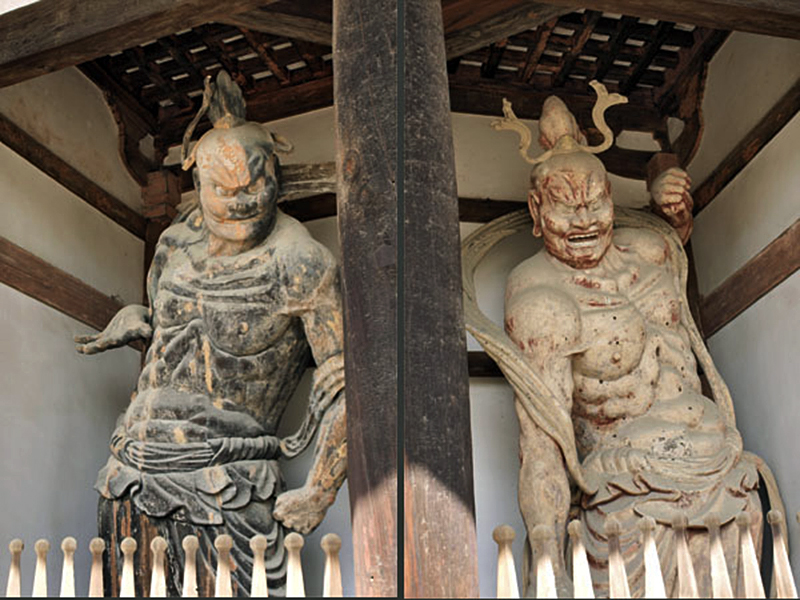 The Central Gate is the entrance of the Western Precinct. It contains a pair of door guardians. They are called Kongo-rikishi, meaning 'Diamond Power Lord'. They were made of clay and the oldest clay statues in Japan. They were made in 711.
The right statue opens his mouth saying 'ah'. The left one closes his mouth saying 'um'. 'Ah' is the first letter in the Japanese alphabet and 'um' is the last one. Ah-um describes all the words. We have a phrase 'a-um-no-kokyu' or a-um breathing. It describes the relationship between two people who are so close that they can communicate with each other without any word. In a sense they are guarding the temple strongly with ah-um breathing.
The Central Gate is the entrance of the Western Precinct. It contains a pair of door guardians. They are called Kongo-rikishi, meaning 'Diamond Power Lord'. They were made of clay and the oldest clay statues in Japan. They were made in 711.
The right statue opens his mouth saying 'ah'. The left one closes his mouth saying 'um'. 'Ah' is the first letter in the Japanese alphabet and 'um' is the last one. Ah-um describes all the words. We have a phrase 'a-um-no-kokyu' or a-um breathing. It describes the relationship between two people who are so close that they can communicate with each other without any word. In a sense they are guarding the temple strongly with ah-um breathing.
The five-story pagoda
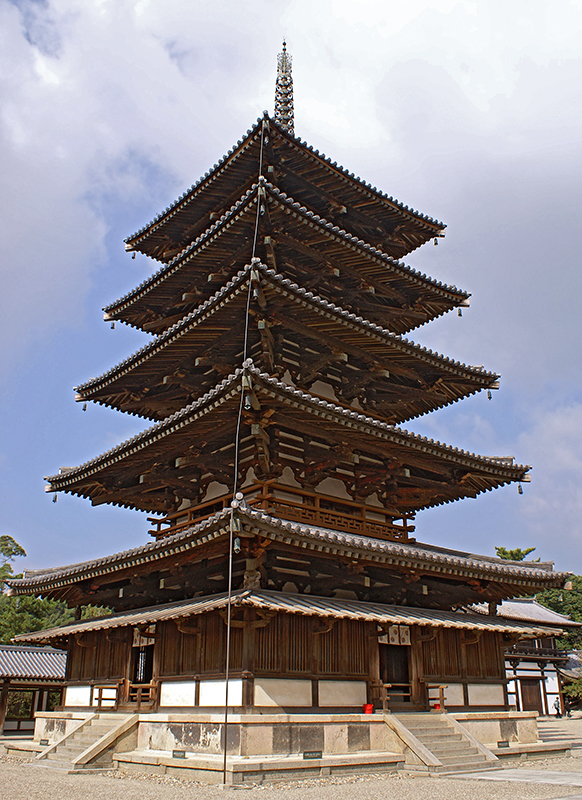 Horyuji pagoda is over 32meters (106 feet) tall. Japan is an earthquake-prone country. This tall building has survived for over 1300 years, despite the fact we had a lot of quakes in Japan. The secret is that most parts are put together without nails. They are connected with fitted joints, creating a wriggle room that can offset the major impact of quakes. Computer simulations have shown that this pagoda can survive a quake as strong as M. 8. You could say pagodas are quake-proof structures. As you know similar techniques are used in modern skyscrapers. Temple carpenters had great skills in those days.
Guze (Kuse) Kannon
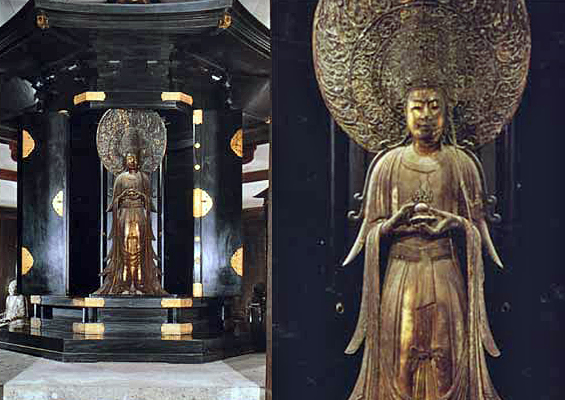 Among the hundreds of statues in Horyu-ji Temple, the most mysterious statue there might be Guze (Kuse) Kannon. Although it was enshrined in the temple's octagonal hall, Yume-dono, in 739, no one had seen it for a long time due to a strict prohibition of public viewing. (More about this below.) In addition, the priests at Horyu-ji Temple did not see it for more than 200 years. The reason is still unclear, but the superstitious priests strongly believed that a severe earthquake would hit the temple immediately if someone unsealed the statue.