

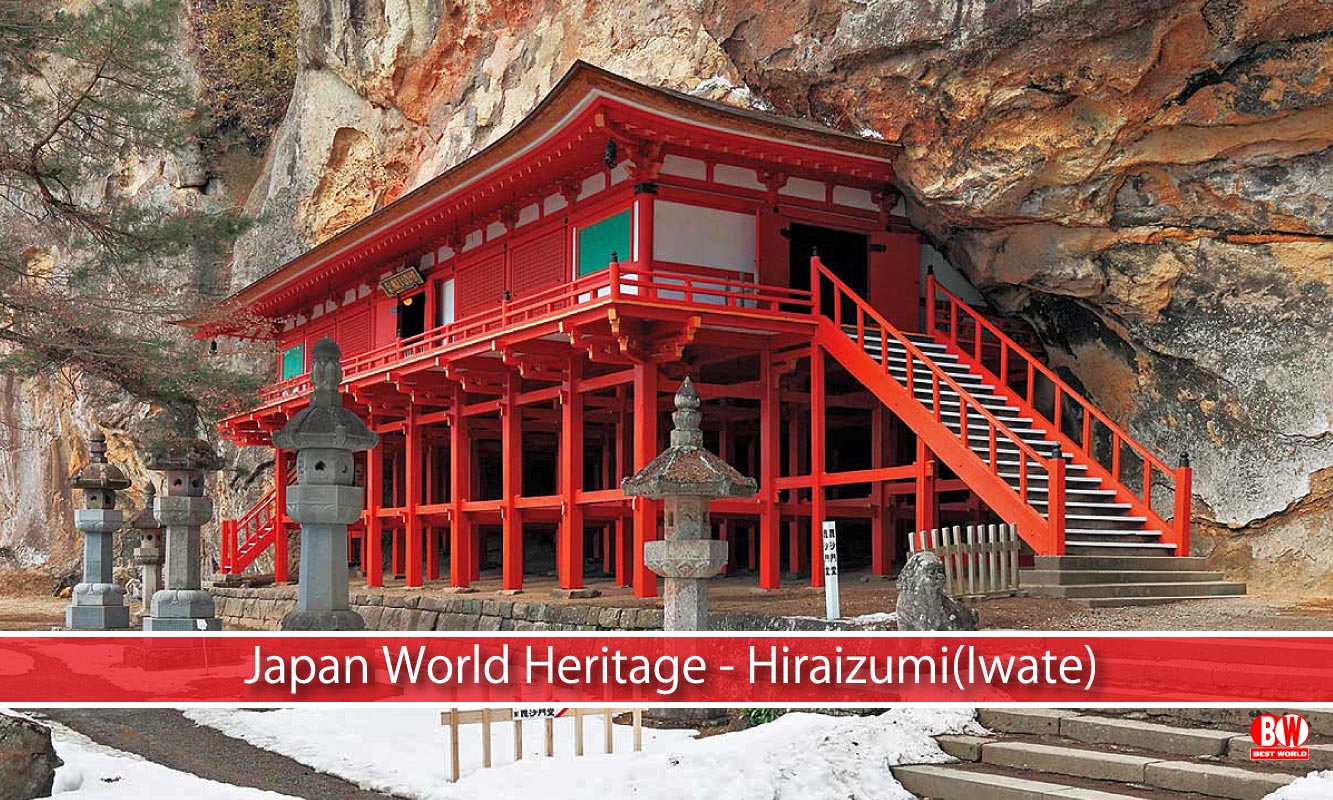
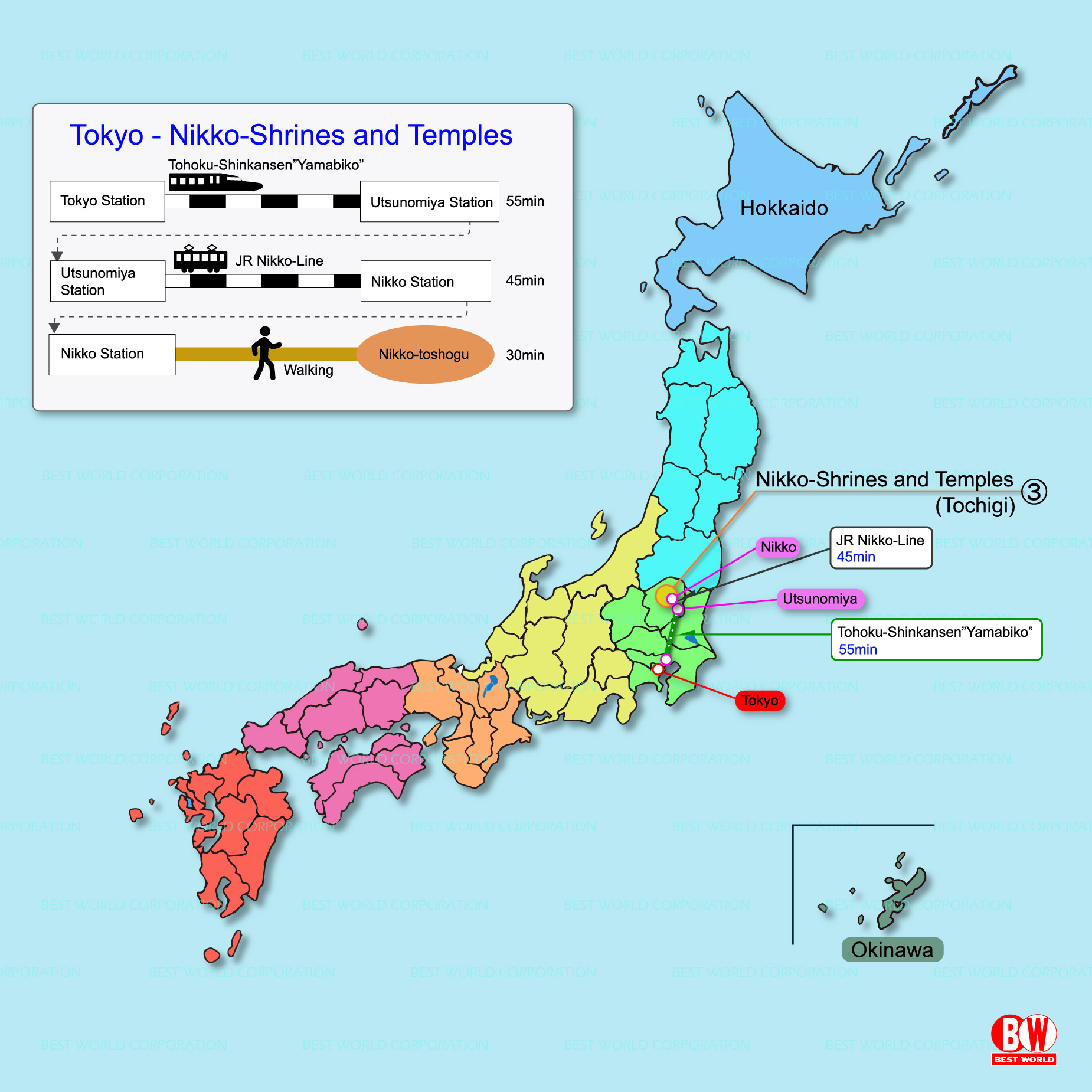
3.Nikko-Shrines and Temples
Ishidorii (Stone Torii Gate)
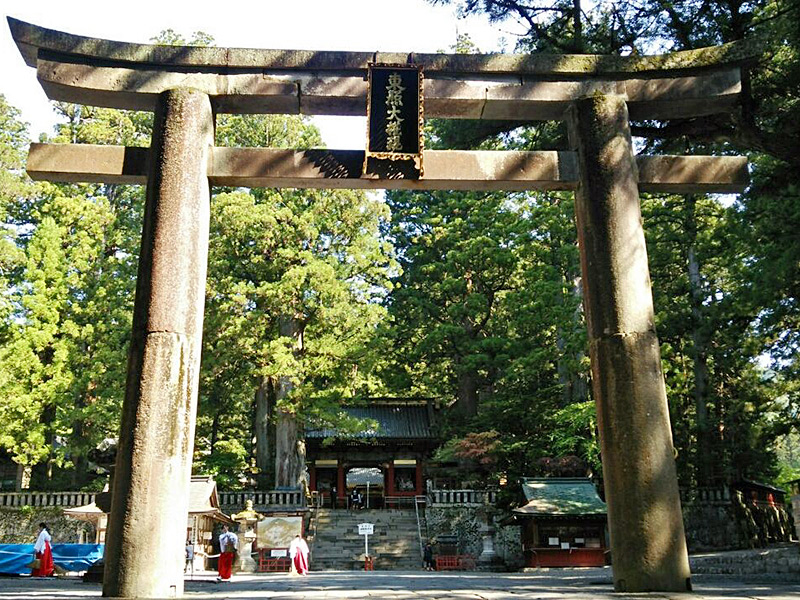 Designated an Important Cultural Property, Ishidorii Gate was dedicated in 1618 by Kuroda Nagamasa, the feudal lord of Kyushu Chikuzen (present day Fukuoka Prefecture). The stone for the gate was transported by ship from Kyushu to Koyama and then manually hauled over land to Nikko.
Omotemon (Front Gate)
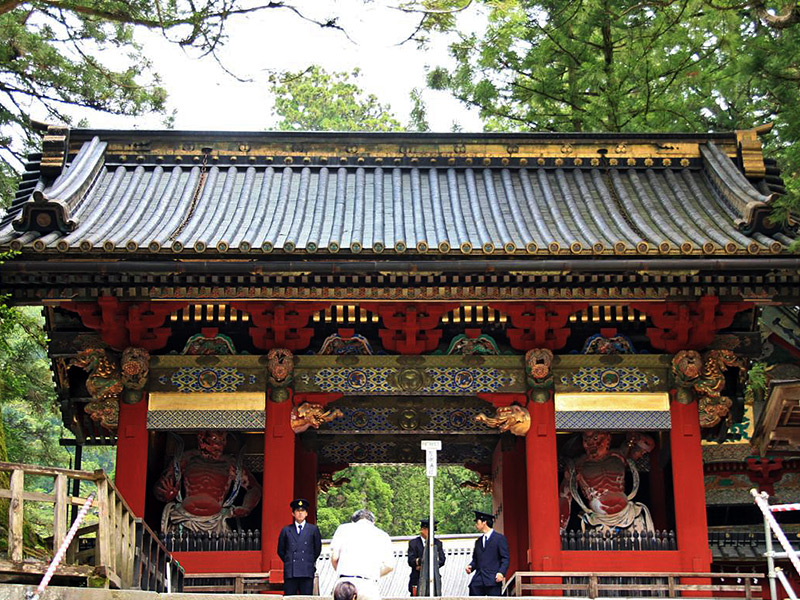 Designated an Important Cultural Property, Omotemon Gate is the first gate at Toshogu Shrine. It is also called Nio Gate because of the two guardian deity statues positioned on the left and right.
Yomeimon Gate
 Designated a National Treasure One of the most beautiful gates in Japan, Yomeimon Gate is said to have been given the name “Main Gate of the Imperial Court.” It is also called “Gate of the Setting Sun” because one could gaze upon it all day and never get tired. It is covered with over 500 carvings depicting traditional anecdotes, children playing, sages and wise men.
Nemurineko (Sleeping Cat)
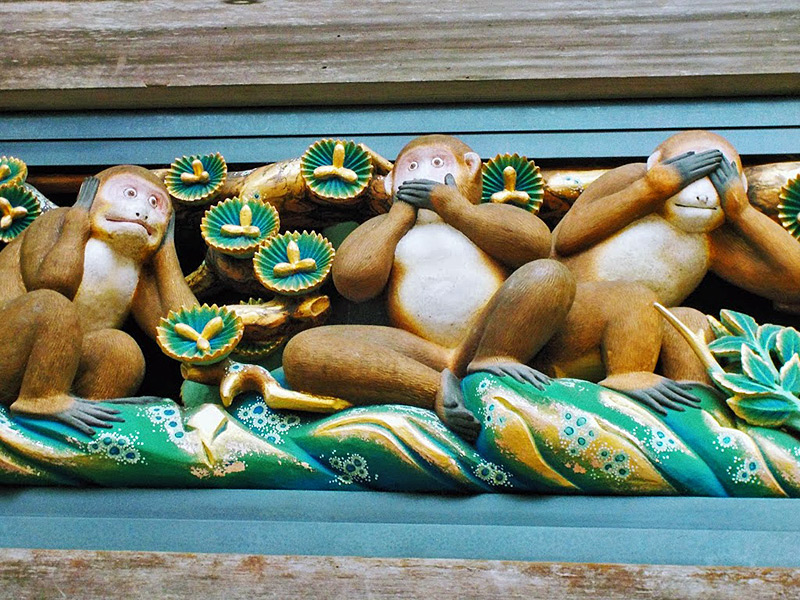 Designated a National Treasure traditionally attributed to the master carver Hidari Jingorou, this carving of a cat dozing while surrounded by peonies and bathed in sunlight is also said to be a depiction of nikko (sunlight).
Kairo (Corridor)
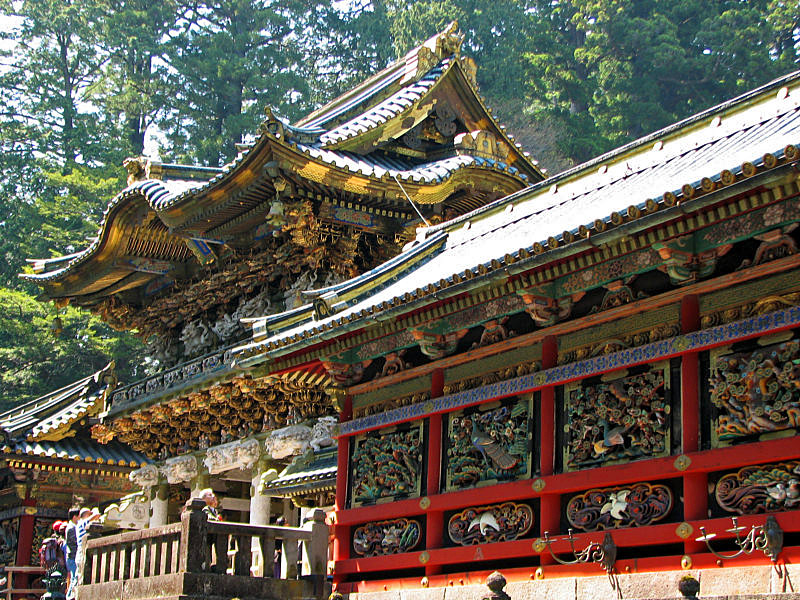 Designated a National Treasure, the exterior wall of the building extending to the left and right of Yomeimon Gate is decorated with flower and bird carvings that are considered among the best in Japan. All the carvings are single-panel openwork painted in vivid colors.
Gojunoto (Five-Story Pagoda)
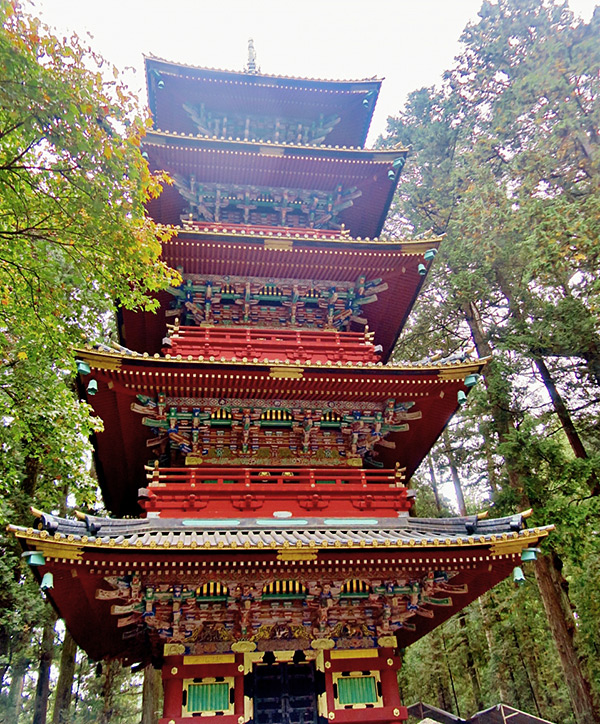 Designated an Important Cultural Property, The Gojunoto Pagoda was dedicated in 1648 by Sakai Tadakatsu, the feudal lord of Obama in Wakasa Province (present day Fukui Prefecture). It was destroyed by fire in 1815 and rebuilt in 1818 by Sakai Tadayuki, a feudal lord of the same lineage.
Sanjinko (Three Sacred Storehouses)
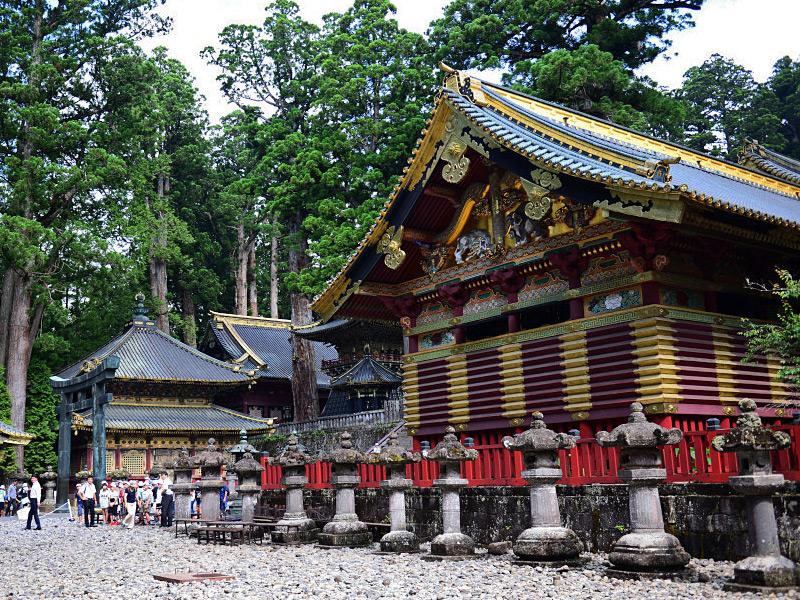 Designated Important Cultural Properties, Sanjiko is a collective designation for three buildings: Kamijinko (Upper Sacred Storehouse), Nakajinko (Middle Sacred Storehouse), and Shimojinko (Lower Sacred Storehouse). Harnesses and costumes used in the Procession of 1,000 Samurai, (a part of the Sacred Processions held in spring and fall), are kept in the storehouses. Large elephant carvings by Kano Tanyu adorn the gable of Kamijinko Storehouse. They are known as the “Imaginary Elephants.”