

6.Ogasawara(Tokyo)
Access to Chichijima and Hahajima
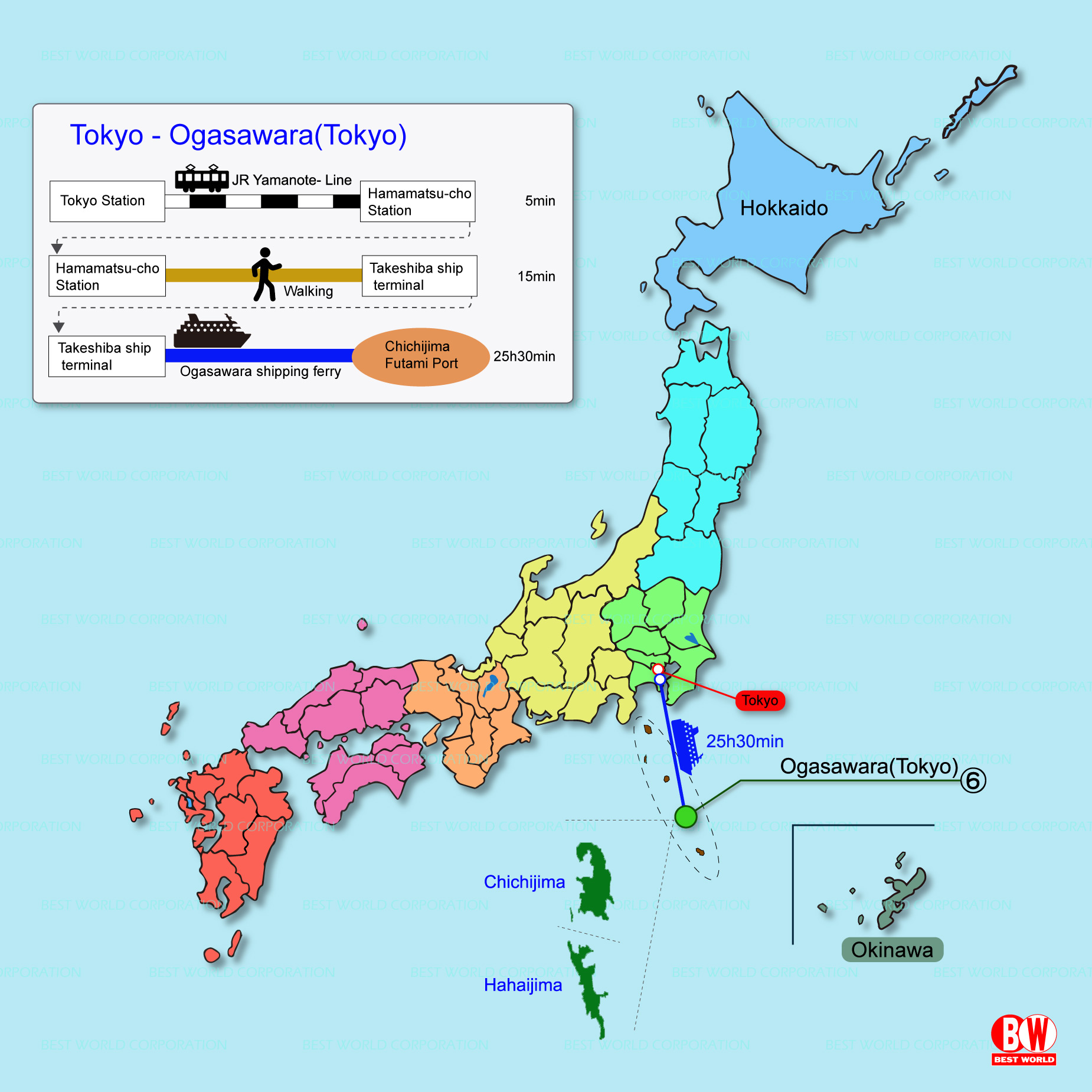
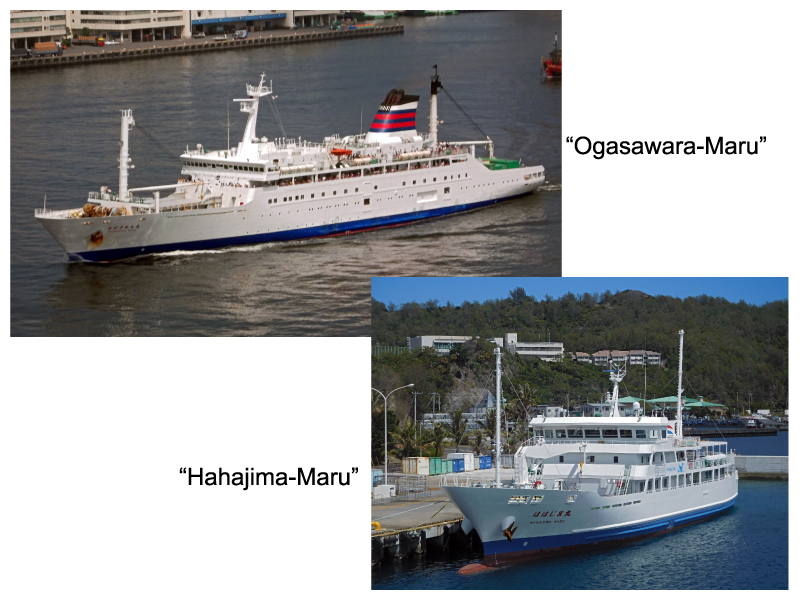 The regular sea lines“Ogasawara-Maru” leaves Takeshiba Passenger Ship Terminal and arrives at Futami Port, Chichijima in 25 hours and 30 minutes.
Hahajima is located approximately 50 km south of Chichijima, and takes approximately 2 hours by the “Hahajima-Maru” from Futami Port.
The regular sea lines“Ogasawara-Maru” leaves Takeshiba Passenger Ship Terminal and arrives at Futami Port, Chichijima in 25 hours and 30 minutes.
Hahajima is located approximately 50 km south of Chichijima, and takes approximately 2 hours by the “Hahajima-Maru” from Futami Port.
Sclerophyllous Scrub
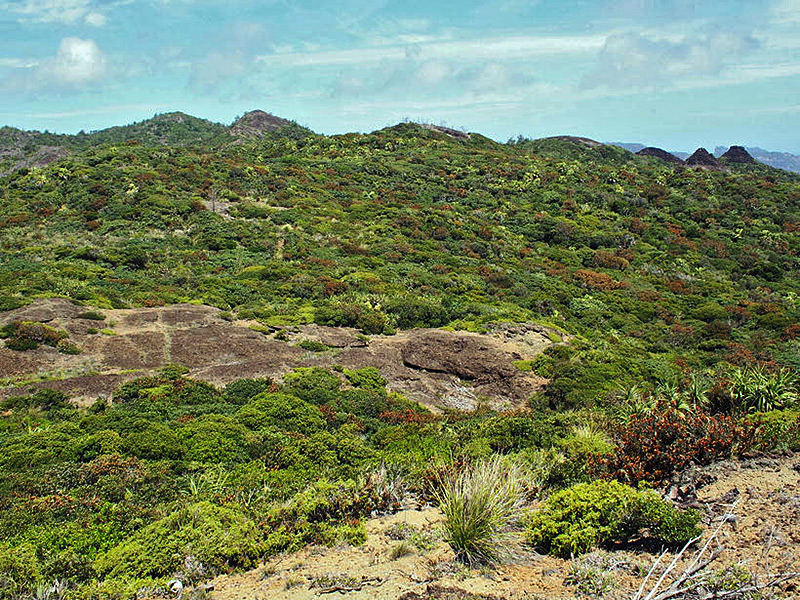 Scierophyllous scrubs extend out primarily from Higashidaira on the central moun-tamn of Chichijima Island and on Anijima Island. Endemic plants that grow here have evolved in such ways as changing the shape of their leaves to small and thick in conjunction with the dry climate, or being stunted to avoid strong coastal winds.
Ogasawara Visitor Center
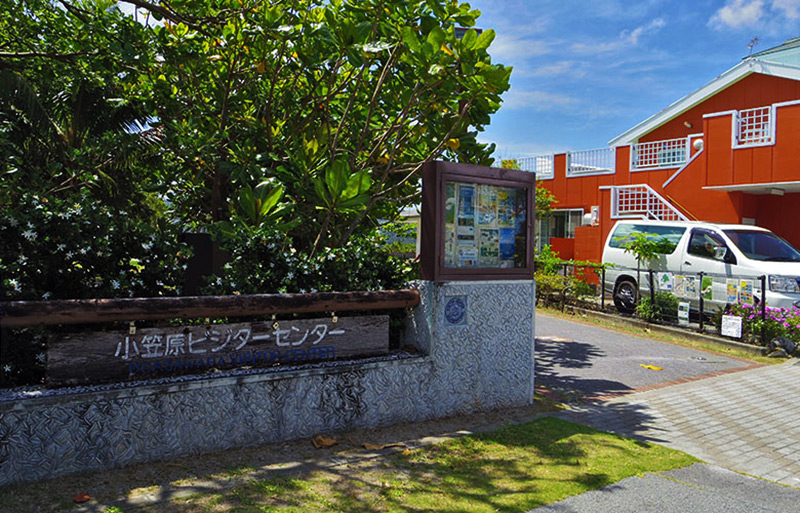 This is a facility that introduces visitors to history and culture, with its primary focus on the nature in Oga-sawara. It offers exhibitions and explanations related to the unique historical path the region has tread as a whaling base and an occupied territory, as well as on the rare plants and animals like the endemic species that can only be found in Ogasawara.
Feral Cat and Feral Goat Fences
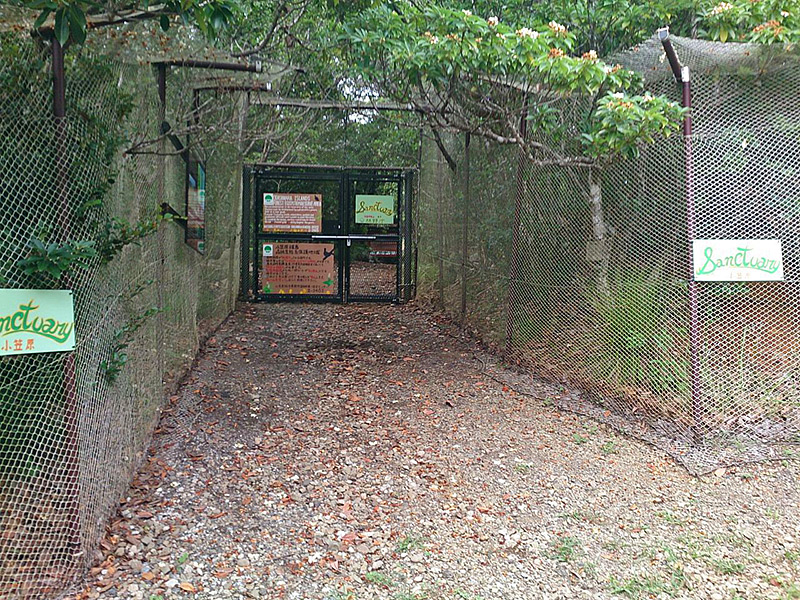 Rare endemic plants and the endemic subspecies of Japanese wood pigeon occur on Higashidaira on Chichijima Island. Efforts are being made to create fences to protect endemic species from feral cats and feral goats, as well as to remove these alien species within the fences.
Columba Janthina Nitens
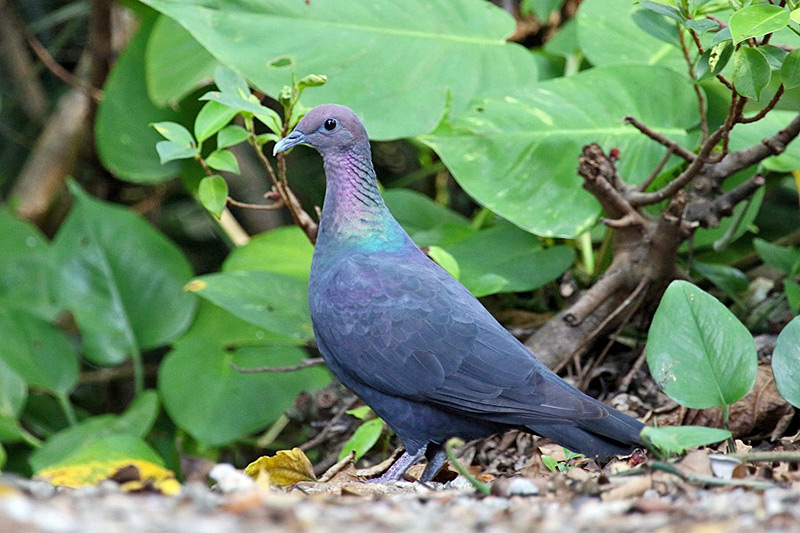 This is an endemic subspecies of Japanese wood pigeon that inhabits the inner forests on the Ogasawara Archepelago. Their numbers had once decreased due to predation by feral cats, but have been on the rise as a result of countermeasures against feral cats and other conservation activities. The pigeon is designated as Natural Monument in Japan.
Red List of the Ministry of the Environment Threatened I A(CR) *Species facing an extremely high risk of extinction in the very near future.
Bonin Flying Fox
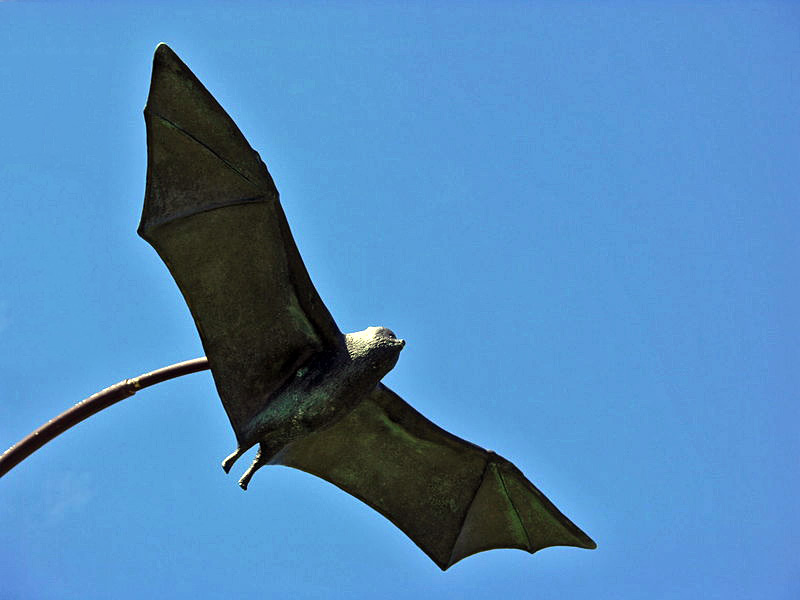 This is the sole mammal endemic to the Ogasawara Islands that belongs to the Pteropodidae family. The species has been confirmed on Chichijima Island, Hahajima Island, and the Kazan Island Group, and it is designated as Natural Monument in Japan.
Red List of the Ministi the Environment Threatened lB (EN) *Species facing a high of extinction in the near future.
Bonin Honeyeater
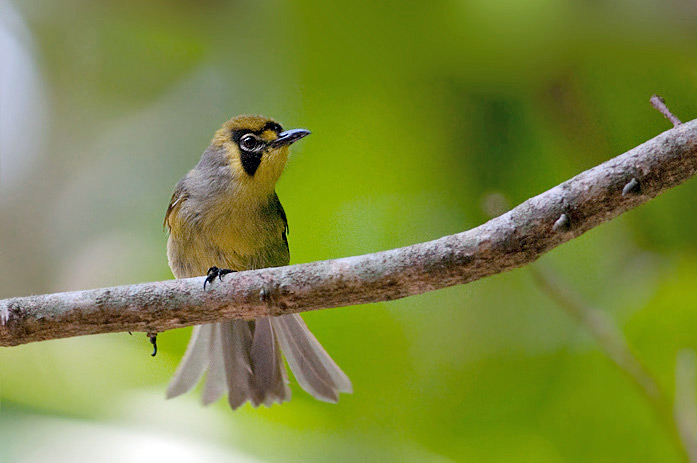 This is the only species of land bird that is endemic to the Ogasawara Islands, and it only inhabits the 3 islands of Hahajima Island and its affiliated Mukohjima and Imotojima Islands. Since the bird has few competitors and predators, it makes use of various different places within the forests.
Red List of the Ministry of the Environment Threatened lB (EN) *Species facing a high risk of extinction in the near future.
Whale Watching
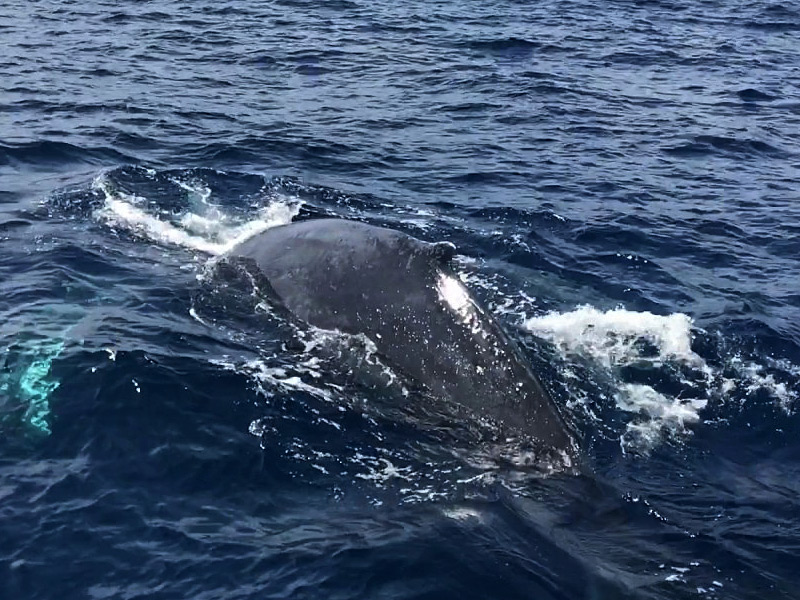 More than 23 species of dolphins and whales have been confirmed in the adjacent waters. Humpback whales can be observed here from winter until spring, while dolphin species and sperm whales can be observed year round.
Subtropical rainforest
 Subtropical rainforests were believed to have been distributed over an extensive region when the Ogasawara Islands were uninhabited. They have declined as a result of development, and now they can only be seen in humid environments in certain areas on Hahajima Island. Tall forest where the trees reach 20 m can be seen with its canopy cornprised of plants like Elaeocarpus photiniaefolius as well as Planchonella obovata. Morus boninensis, which has currently become a rare species because it was used as lumber, can also be seen.
Quotation from the Ministry of the Environment
・Ogasawara Islands (World Heritage property)pdf
・Ogasawara Islands (Outstanding Universal Value/Protection and Management)pdf