

2.Hiraizumi(Iwate)
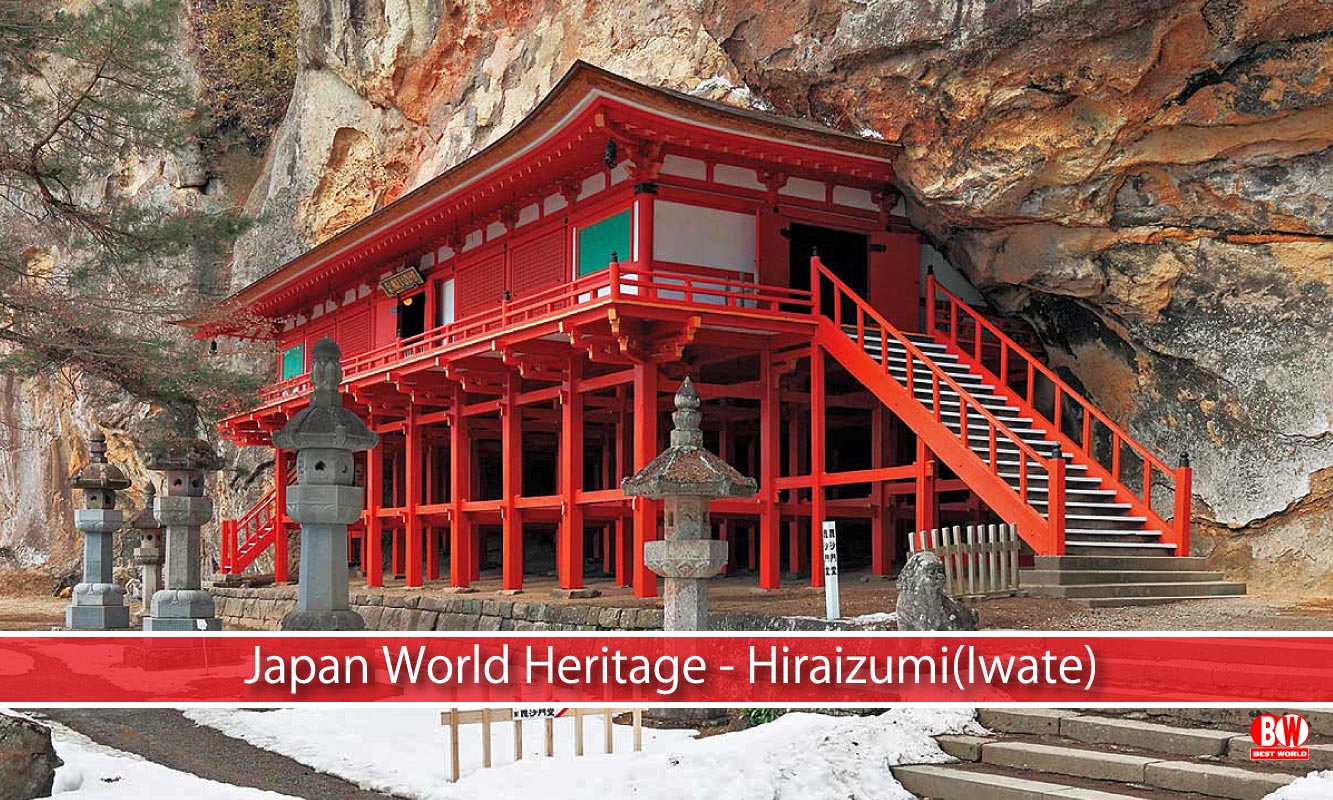
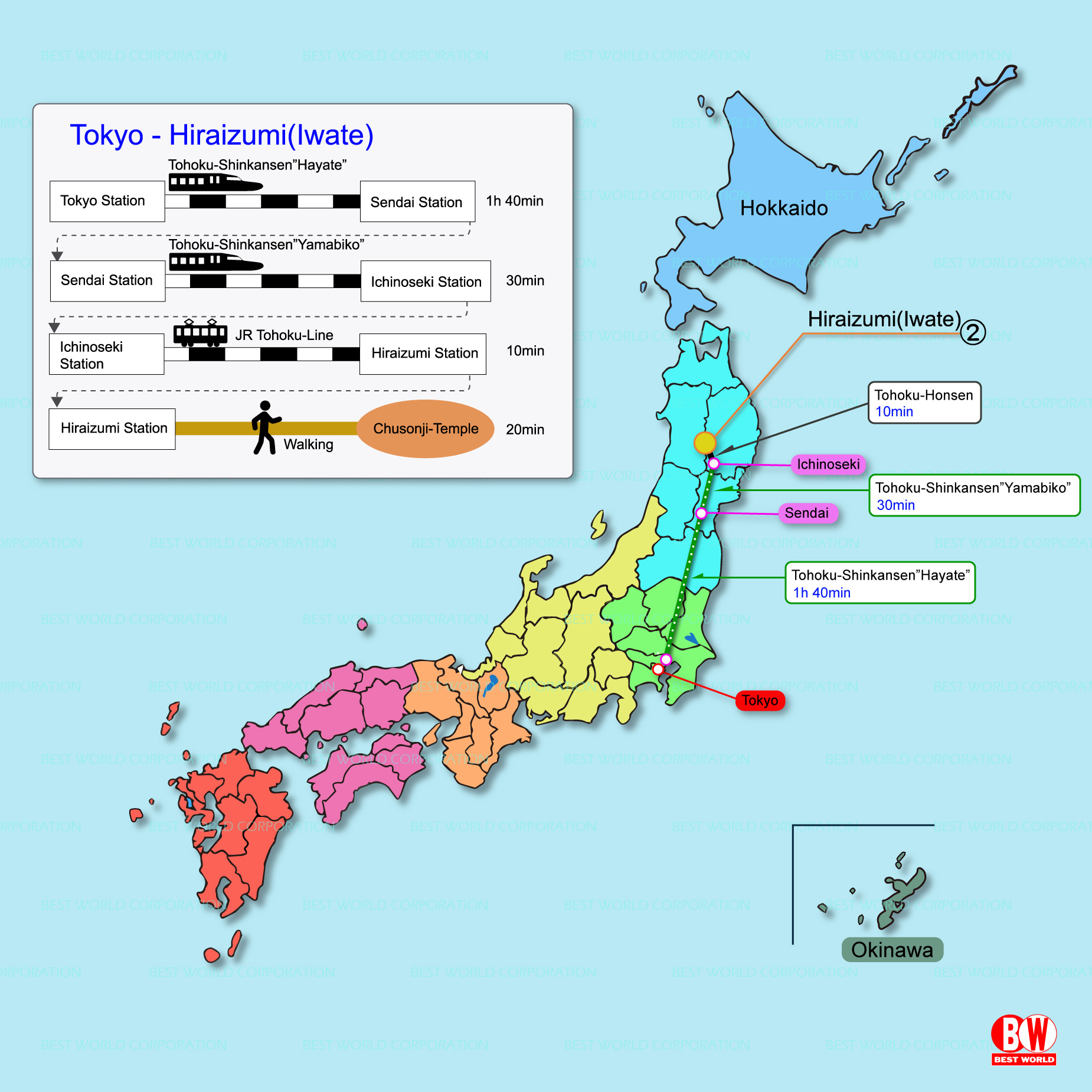
Chuson-ji
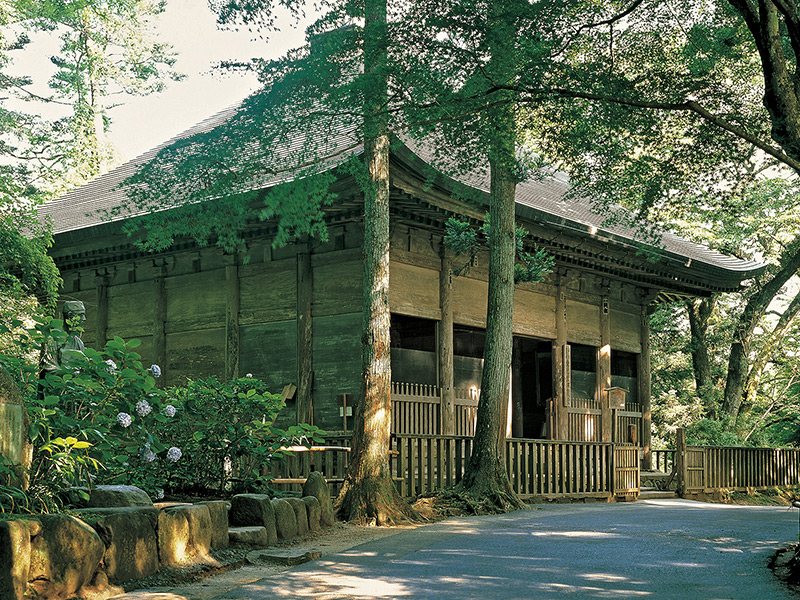 Chuson-ji is a temple complex based in Hiraizumi, with great halls, built by the first Oshu-Fujiwara lord, Kiyohira, in the early twelfth century. After the fall of the Oshu-Fujiwara clan, many Buddhist halls were lost, but in addition to six national treasures and important cultural properties such as the Konjikido, Kyozo, and Konjikido Sheltering Hall ruins from this time are preserved in good condition. The World Heritage Committee says, “Chuson-ji’s Konjikido with its heavy gold leaf is the only thing remaining from the 12th century, and reflects the enormous wealth of Oshu-Fujiwara.” They also gave the Oike Temple Site, designated as a temple site listed in “Chuson-ji Construction Memorial Prayer,” high appraisal.
Motsu-ji
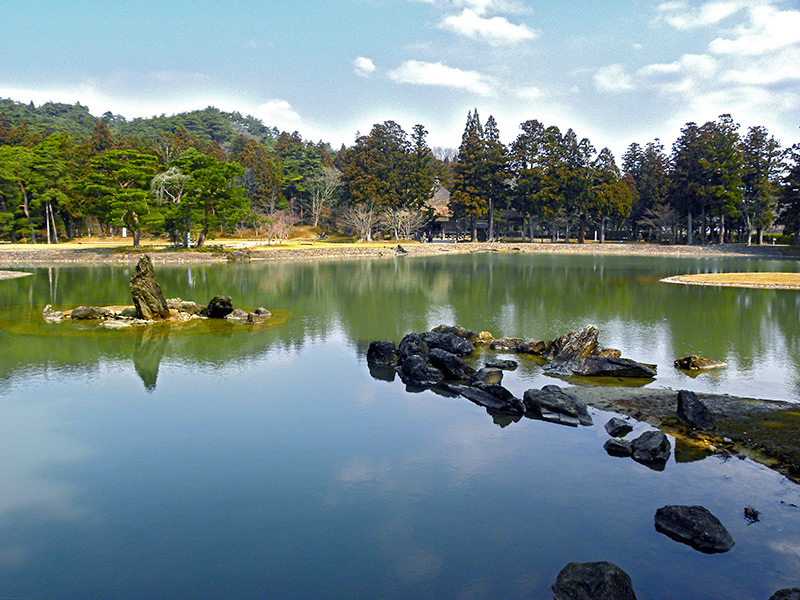 Motsu-ji was built by the second and third lords of the Oshu-Fujiwara clan, Motohira and Hidehira. Later, according to “Azuma Kagami”,“there are no temples in the country that can compare to it”, but by the modern era, all pagodas have disappeared. Within the grounds, the archaeological sites of the time are in good condition, and the main Jodo gardens have been restored and reproduced as in former times.The World Heritage Committee gave high evaluations to Hiraizumi’s Jodo gardens represented by Motsu-ji Teien with the following: “It exemplifies the fusion of Japan’s ancient concepts concerning the Jodo ideals and their connection to gardens, water, and the surrounding landscape.”
Kanjizaio-in Ato
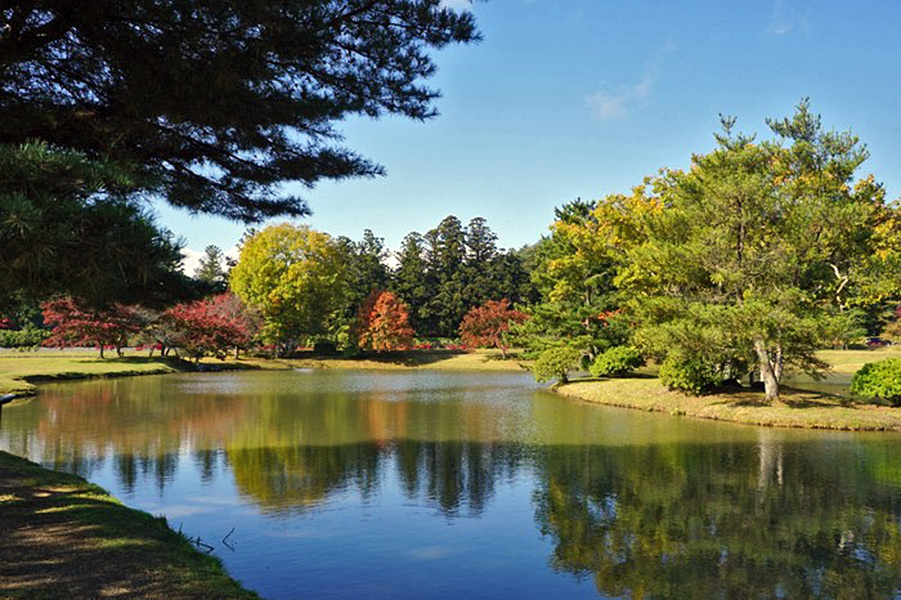 The Kanjizaio-in site shows ruins of a temple that was built by the wife of the second Oshu-Fujiwara lord, Motohira. The Jodo garden, centered around Maizurugaike Pond spreading in front of the large and small Amidado ruins, and behind the grounds Mt. Kinkeisan can be found.By the modern age, all pagodas have been lost and the gardens devastated, later becoming rice paddies. However, the remains of the great halls and gardens were restored and maintained based on results of excavations of the ruins, so that we can see them as they were today.The World Heritage Committee gave high evaluations to Kanjizaio-in, Motsu-ji and Muryoko-in Ato, adding that they are properties “constructed as a symbolic expression of the Buddhist Land (Jodo) in this world.”
Muryoko-in Ato
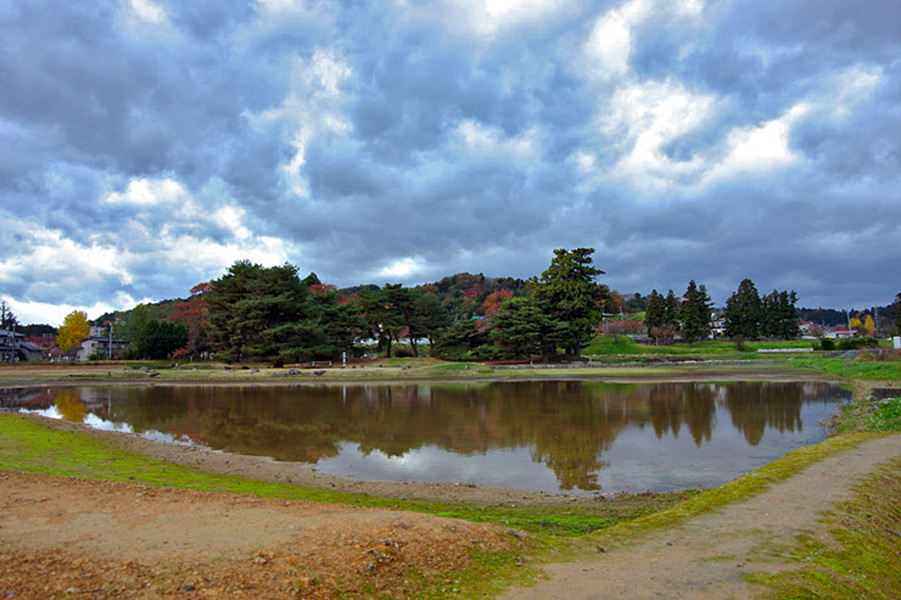 Muryoko-in Ato is the site of a temple constructed by the third Oshu-Fujiwara lord, Hidehira. An Amida hall was constructed to imitate the Phoenix Hall of the Byodo-in Temple in Uji, as well as great halls surrounding a pond. In addition, behind the Amida Hall (to the west) Mt. Kinkeisan is in the center of a gentle mountain range.After the collapse of the Oshu-Fujiwara clan, the great halls went disappeared or went to ruin and the pond was made into a rice paddy, but the site was kept in good condition.The World Heritage Committee gave high praise to the Jodo gardens of Hiraizumi that form the completed form of Muryoko-in, calling it, “a scene of an ideal town put together by carefully arranging the Buddhist monastery in connection with ponds, forests and the summit of Mt. Kinkeisan.”
Mt. Kinkeisan
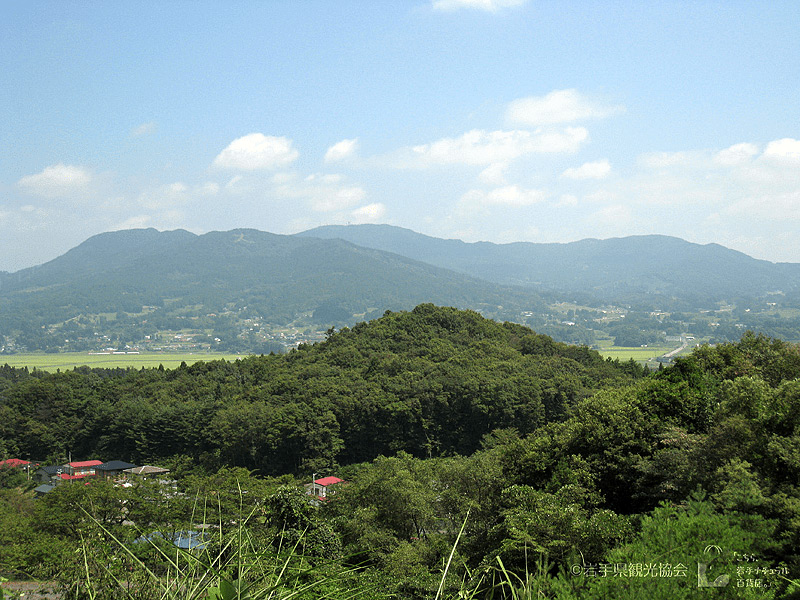 Mt. Kinkeisan is a mountain of faith which the Oshu-Fujiwara clan used as a sutra burial mound. At the east base of the mountain is the “Hanadate Haiji Site” with the tradition of the Zao Gongendō site.The World Heritage Committee gave high praise in the Certificate of Registration for “Hiraizumi” focusing on the three Jodo gardens in Hiraizumi, Motsu-ji, Kanjizaio-in Ato and Muryoko-in Ato, as well as the sacred Mt. Kinkeisan, saying that their existence was a major feature of Hiraizumi.